Can Scratches Be Removed From Black Plastic Trim and Bumpers in Chowchilla?
The answer depends less on the scratch and more on what kind of black plastic it landed on.
Can scratches be removed from black plastic?
Yes, most scratches in black plastic can be removed or made hard to see, but the method depends on the plastic. Light scuffs on textured trim often respond to careful heat or a trim dye. Glossy black parts polish like paint. Deep gouges need filling, re-texturing and refinishing, or a new part. Describe yours at (559) 900-3095.
What kind of black plastic is on your car?
Before anyone touches a scratch, it helps to know what the part is made of and how it was finished at the factory. Most black plastic on a modern vehicle falls into one of a few groups, and each one behaves differently when it gets marked.
Textured, unpainted trim is usually polypropylene or a similar olefin blend. The color runs all the way through, and the surface has a molded grain that hides small marks. Glossy black trim, often around windows, grilles and pillars, is either painted with a clear coat on top or molded from a harder, shinier plastic. Some lower bumper covers are painted black to match the body, which makes them a paint job rather than a trim job.
- Textured, unpainted: grained surface, color through the material, common on lower bumpers, fender flares and mirror bases
- Glossy painted: black base coat under clear coat, repaired like any painted panel
- Glossy molded: hard, shiny plastic with no clear coat, scratches easily and shows every swirl
- Painted bumper cover: body-color or black paint over flexible plastic, often hiding sensors
Light scuffs on textured trim
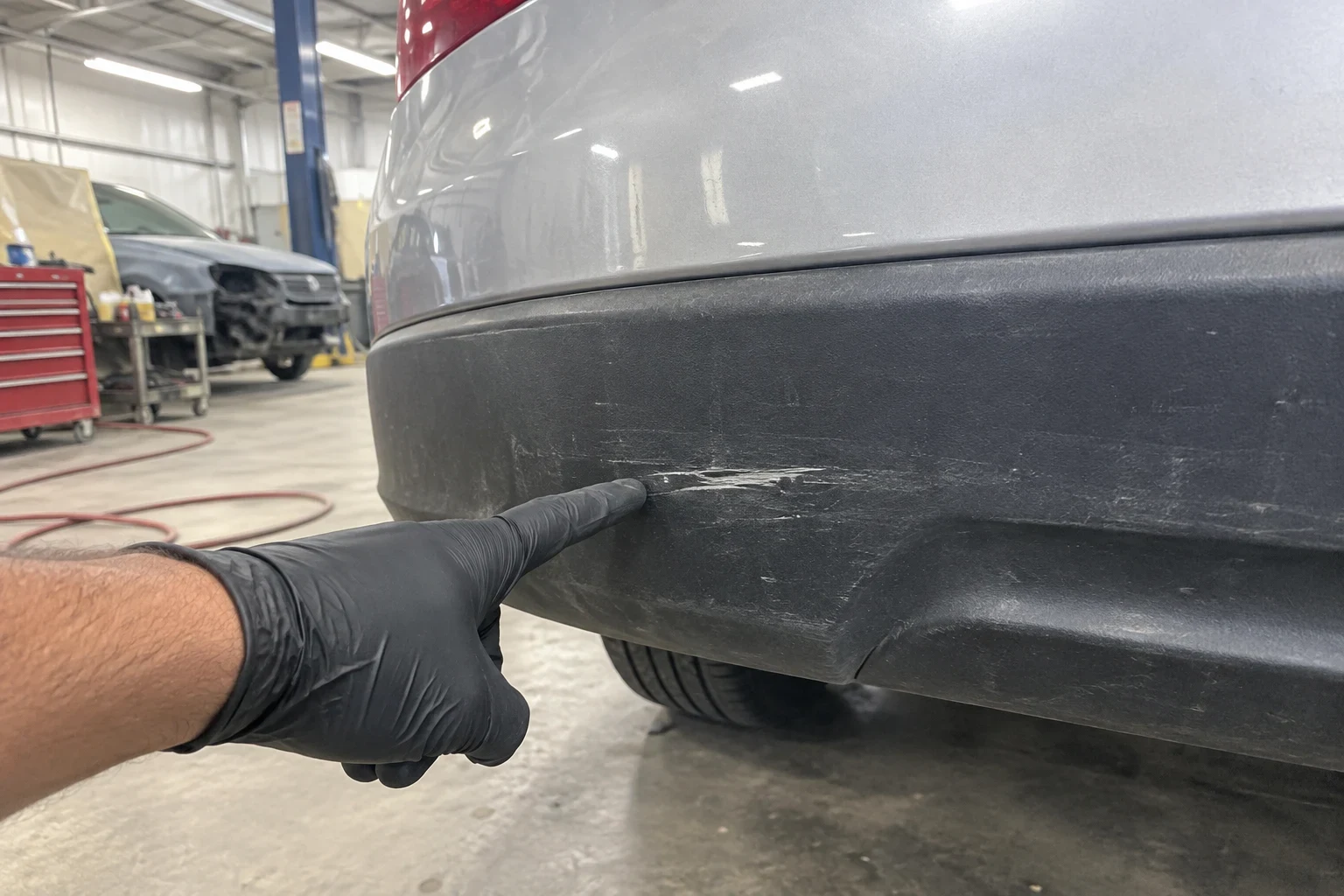
A white or gray scuff on textured black plastic is often not a cut at all. It is the top layer of grain crushed or smeared, and it reflects light differently from the surface around it. Controlled heat can soften that top layer just enough to let the grain relax and the color come back. Done carefully, the mark fades into the surrounding texture.
Heat takes judgment. Too much and the plastic glazes, goes shiny or warps, and a small scuff becomes a larger blemish that cannot be undone. On a bumper cover that houses parking sensors or a radar unit, heat near those parts is something we avoid entirely.
Where heat is not the right tool, a penetrating trim dye can darken the scuff and blend it in. It works well on light marks but will not fill a groove you can catch with a fingernail.
Deep scratches and gouges
Once a scratch has removed material, the job changes. Sanding textured plastic flat would erase the grain and leave a smooth, shiny patch that stands out more than the scratch did. Instead, the damaged area is cleaned, filled with a flexible filler made for plastic, and shaped to the original contour.
Next comes the texture. A textured coating is sprayed to rebuild the grain, then a flexible black finish goes over it so the repair bends with the part instead of cracking. The goal is a surface that matches the sheen and grain of the trim beside it, not a dark patch that looks newer than everything around it.
If the plastic is cracked through, torn at a mounting tab or deeply gouged across a large area, plastic welding or a new part may be the better answer. We will tell you plainly which way makes sense for your car and why.
Glossy black trim and painted bumpers
Gloss black is the least forgiving finish on a vehicle. Fine scratches and swirl marks show from every angle, and a car wash brush can leave a haze in one pass. When the trim has a clear coat, light scratches can usually be polished out in stages, the same way we correct paint on a body panel.
Molded gloss trim with no clear coat is softer and thinner at the surface, so polishing has to be gentle and limited. Scratches that go deeper are often better handled by refinishing the part or replacing it.
A painted bumper cover with a scratch through the color is a refinishing job. That means prep, primer for flexible plastic, base coat and clear coat, matched to your vehicle. Our paint and refinishing work covers this, and it is usually part of a bumper repair visit anyway.
Why sun-faded plastic changes the repair
Unpainted black trim slowly turns gray as UV breaks down the surface, and the long, hot summers around Chowchilla speed that along. On faded trim, a freshly repaired spot can look darker than the rest of the part. A good repair accounts for that by restoring the surrounding area, or the whole piece, so the finish reads as one even color.
This is also why we look at the entire part before quoting anything. A scratch on a faded bumper is a different job from the same scratch on a part that still has its factory depth of color.
What the rules mean for a trim or bumper repair
In California, an auto body shop has to give you a written estimate and get your approval before work begins, and it needs your OK again before doing more than what was approved. For a small trim repair, that keeps the scope clear: you know if the job is a restore, a refinish or a replacement part before anything happens.
Bumper covers add one more step. Many hold parking sensors, blind-spot radar or cameras, and if a cover is removed, refinished or replaced, those systems may need to be checked or recalibrated to the manufacturer's procedure. We note that on the estimate so it does not come up as a surprise later.
More questions about scratched black plastic
Will a trim restorer from the store fix my scratches?
It can darken faded plastic and hide very light scuffs for a while. It will not fill a groove, and some products wash off or streak in the first few rains or washes.
Does my insurance cover a scratched bumper?
If the scratch came from a collision or a covered event, it may be part of an insurance claim, depending on your policy and deductible. For a small scuff, many drivers decide it makes more sense to pay for the repair directly, and we can walk you through both options.
How long does a black trim repair take?
A light scuff restore is a short job. Filling, re-texturing and refinishing take longer because each coat needs time to cure, so we will give you a realistic timeline with the estimate.
Does the bumper have to come off the car?
Light restores and small fills can often be done with the cover in place. Refinishing a full cover or working near sensors usually means removing it, and we list that on the estimate before starting.
Not sure what kind of scratch you have?
Call and describe the mark and where it is on your vehicle. We will tell you whether it sounds like a restore, a refinish or a part replacement, and set a time to bring your car in for a written estimate.