ServicesFrame Straightening
Frame Straightening in Chowchilla
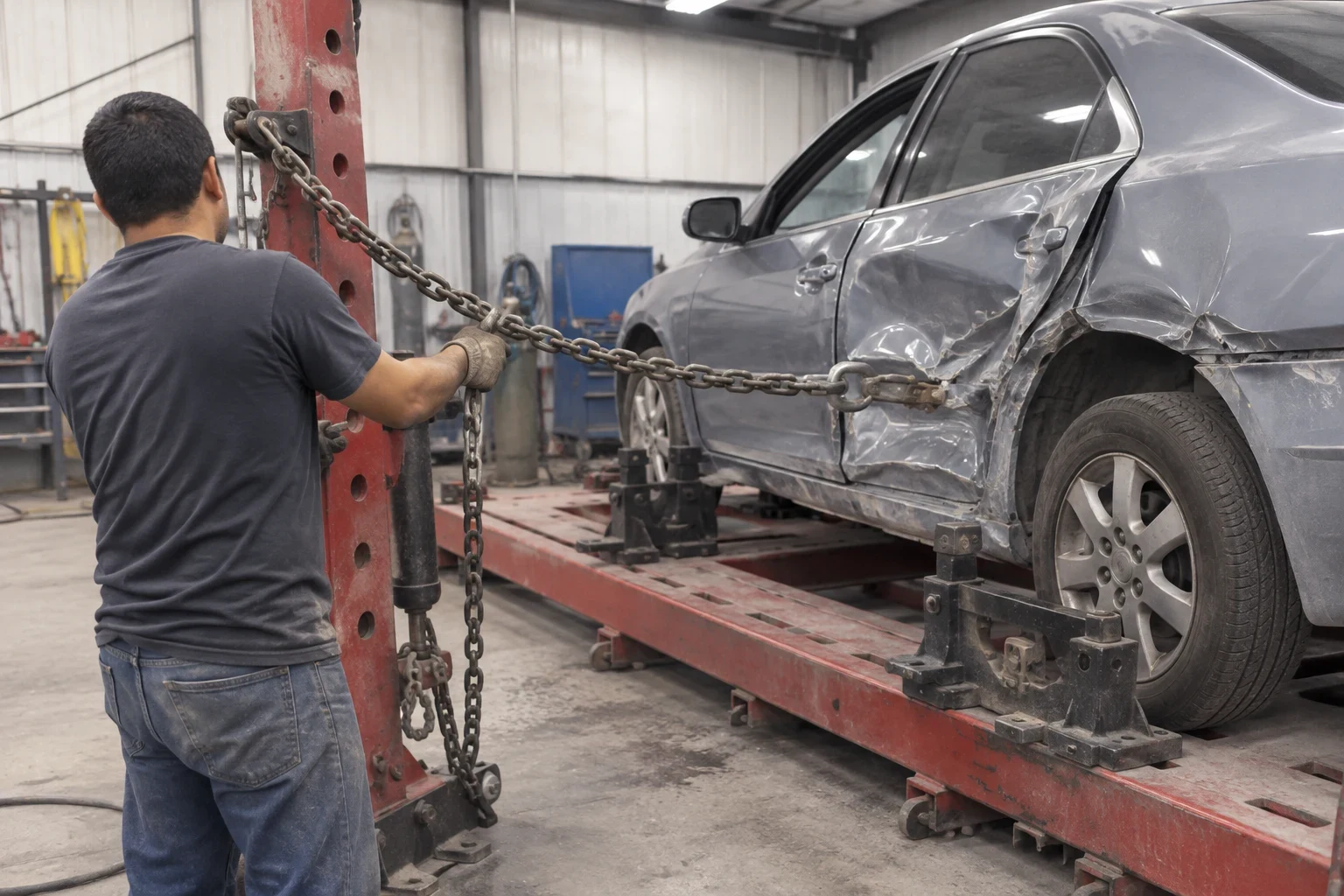
After a hard hit, the structure under the panels decides how your car drives, where it crumples next time and whether the doors ever fit right again. We measure your vehicle against its factory dimensions, pull it back to spec and show you the numbers.
What frame straightening actually fixes
Most cars on the road today are unibody, which means the floor pan, rails and pillars are welded into one shell instead of bolted to a separate ladder frame. Trucks and many full-size SUVs still ride on a full frame. Either way, a collision can shift mounting points by a few millimeters, and that is enough to throw off the suspension, the steering and the way crash energy travels through the car.
There is no city permit for this kind of work. The rulebook is the manufacturer's repair procedure for your exact model: where it can be pulled, which parts may be straightened and which must be replaced, and whether heat is allowed on its high-strength steel. We work from those procedures and explain them in plain terms, so you know why the repair is planned the way it is.
Frame straightening often sits inside a larger job. If the panels, bumper or paint were damaged too, we plan the structure first and the cosmetic collision repair after, so everything lines up on a sound base.
What the work includes
- Electronic measurement
- We compare dozens of reference points on your vehicle to the manufacturer's dimension data. The printout shows exactly which points moved and by how much.
- Controlled pulls on the bench
- Your car is anchored at the points the manufacturer specifies, then pulled in stages. We remeasure between pulls rather than guessing by eye.
- Straighten or replace, by the book
- Some rails and reinforcements are designed to be replaced once kinked, not straightened. When the procedure calls for a new part or a sectioned repair, we follow it and tell you before we start.
- Alignment and suspension check
- Once the structure is back in tolerance, we confirm the suspension mounting points and set the wheel alignment so the car tracks straight.
- Driver-assist sensor calibration
- Cameras and radar units mounted to the structure can aim slightly off after a pull. When your vehicle has them, we include calibration so lane and collision warnings work as intended.
Signs your car may need frame straightening
It pulls or drives crooked
If the steering wheel sits off-center or the rear seems to follow at a slight angle, a mounting point may have moved. An alignment alone usually will not hold.
Gaps that don't match
Uneven spacing around the hood, trunk or doors on one side is a common clue that the shell underneath has shifted.
Doors or trunk that stick
A door that suddenly needs a firm push to latch, or a trunk lid that rubs, can point to a twisted opening.
Uneven tire wear
Inside or outside edges wearing fast on one corner, even after an alignment, suggests the geometry is out.
Wrinkles underneath
Creases in the floor pan, rails or wheel wells are worth a look. A slide into a ditch on a farm road can do this without much visible damage up top.
How the repair runs once your car is here
- 1
Inspection and first measurement
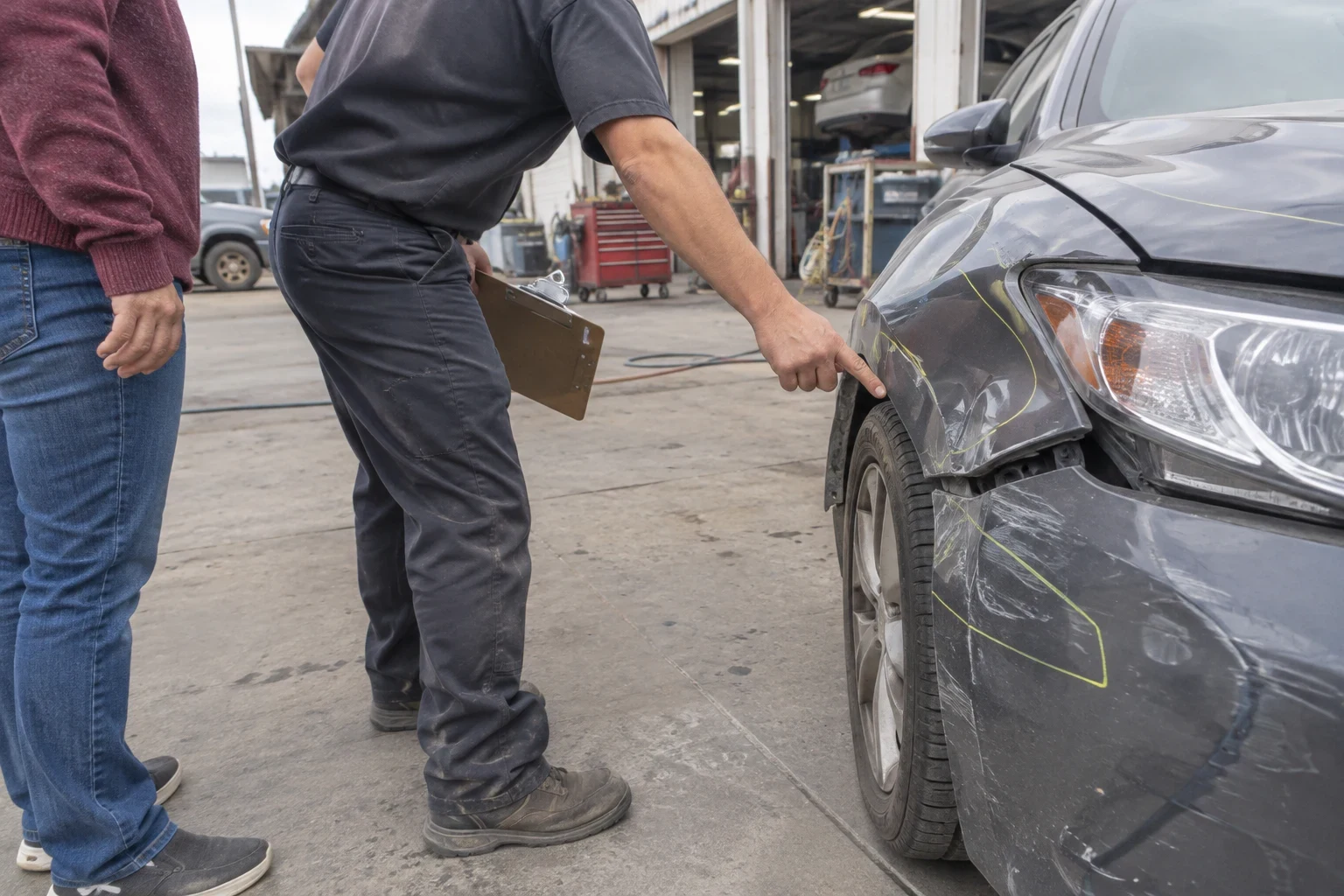
We look over the visible damage, put the car on the measuring system and record where each reference point sits. You get a clear explanation of what moved and what that means for the repair.
- 2
Repair plan and estimate
Using the manufacturer's procedures, we decide which areas get straightened and which get replaced, then write the estimate line by line. If an insurance claim is involved, the same plan goes to your adjuster.
- 3
Pulling and remeasuring
The vehicle is anchored and pulled in measured stages. We check the numbers after each stage until every point is within the factory tolerance.
- 4
Final checks
We set the alignment, calibrate any driver-assist sensors and road test the car. You can see the before and after measurements when you pick it up.
What moves the cost of frame work
Every structural repair is priced from the measurement, not from a glance at the bumper. Two cars with similar dents can need very different work underneath. We go through each line of the estimate with you so nothing on the final bill comes as a surprise.
- How far the structure moved
- A single corner pushed back a few millimeters takes fewer pulls than a car twisted across its length.
- Straighten versus replace
- When the manufacturer requires a new rail, apron or reinforcement, parts and welding time add to the job.
- Unibody or full frame
- Setup and anchoring differ between a sedan's unibody and a truck's separate frame, and so does the labor.
- Sensors and alignment
- Vehicles with cameras and radar near the damage need calibration after structural work, which adds a line to the estimate.
- The rest of the damage
- Panel, bumper and paint work that ride along with the frame repair are priced as their own lines.
Frame straightening questions
Something not covered here? (559) 900-3095
Can a bent frame really be made safe again?
In many cases, yes. When the work follows the manufacturer's procedures and the measurements come back within tolerance, the structure behaves as designed. Where a part is not meant to be straightened, we replace it instead of forcing it.
If the frame is bent, will the insurer write my car off?
Structural damage on its own does not decide that. The insurer weighs the cost of the repair against what your vehicle is worth, and that comparison is what settles a total loss. Many cars with bent rails or a shifted unibody are straightened and driven for years afterward.
Is there an inspection or permit for frame repair?
No permit is pulled for this work. The standard that matters is the manufacturer's repair procedure, and the proof is the measurement record. We keep the before and after readings and are glad to walk you through them.
How long will my car be at the shop?
It depends on how much moved, whether parts must be ordered and what other repairs are needed. Once the car is measured and the plan is set, we can give you a realistic timeline by phone and keep you posted if anything changes.
Will my insurance pay for frame straightening?
When the damage came from an accident your policy covers, the structural work usually belongs in the claim alongside the panels and paint. We give the adjuster our measurement printouts, so the estimate reflects what shifted underneath and not only what shows on the surface. The Insurance Claims page explains the rest of how we handle that process.
Get the structure measured before anything else
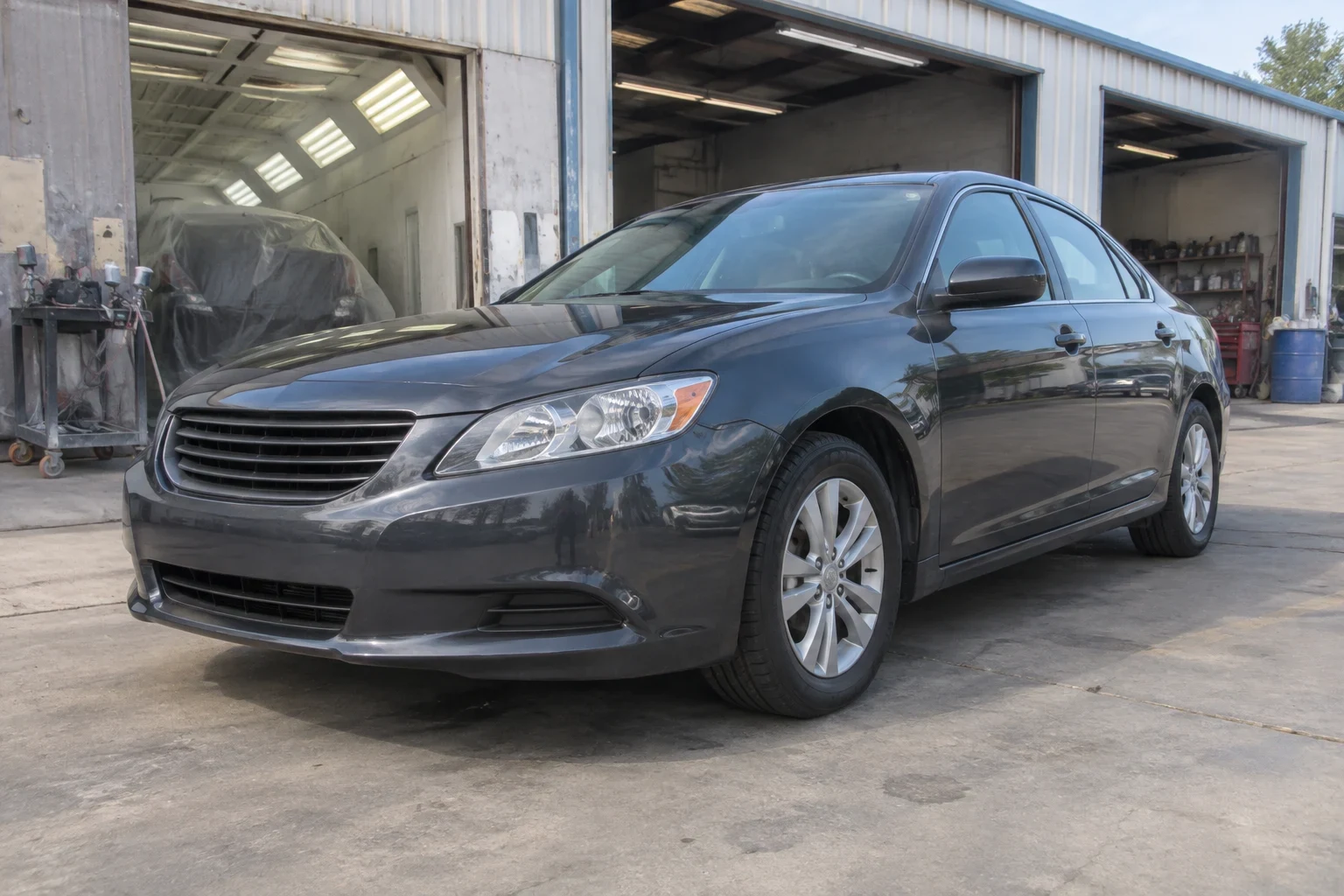
Bring your car in and we will show you what the numbers say. Drivers come to us from Chowchilla, Madera, Merced and nearby towns.