ServicesPaint and Refinishing
Paint and Refinishing in Chowchilla
We refinish panels, blend new color into the original and finish with a clearcoat built to last. Every color starts from your vehicle's paint code and is checked against the car itself, using low-VOC coatings that meet California air quality rules.
What refinishing fixes, and when it is the right call
Paint does two jobs. It gives your car its color and it protects the metal and plastic underneath. Once the clearcoat fails, the color fades fast and bare spots can start to rust. Refinishing restores both: the look you want and the protective layer the panel needs.
Sometimes a polish is enough, and we will tell you so. If a scratch has not cut through the clearcoat, correcting it costs far less than repainting. When the damage goes deeper, or the clear is peeling, the panel needs proper prep and new coats.
The rules matter here too. California limits the solvents allowed in automotive coatings, and our air district enforces those limits on body shops. We use compliant waterborne basecoats and spray inside an enclosed, filtered booth, so the finish on your vehicle is done the way the regulations expect.
What our paint work includes
- Color matched from the paint code
- We read the code on your door jamb, mix the formula and spray a test card. That card is held against your car in daylight before any panel is painted, because factory colors vary slightly from batch to batch.
- Proper surface prep
- Old clearcoat is sanded back, chips are feathered smooth and any surface rust is removed down to clean metal. Primer and sealer go on before color. Most paint failures trace back to skipped prep, so this step takes the most time.
- Blending into neighboring panels
- New paint next to aged paint can look different even when the formula is right. We fade the color into the adjoining panel so the eye does not catch an edge.
- Booth-sprayed base and clear
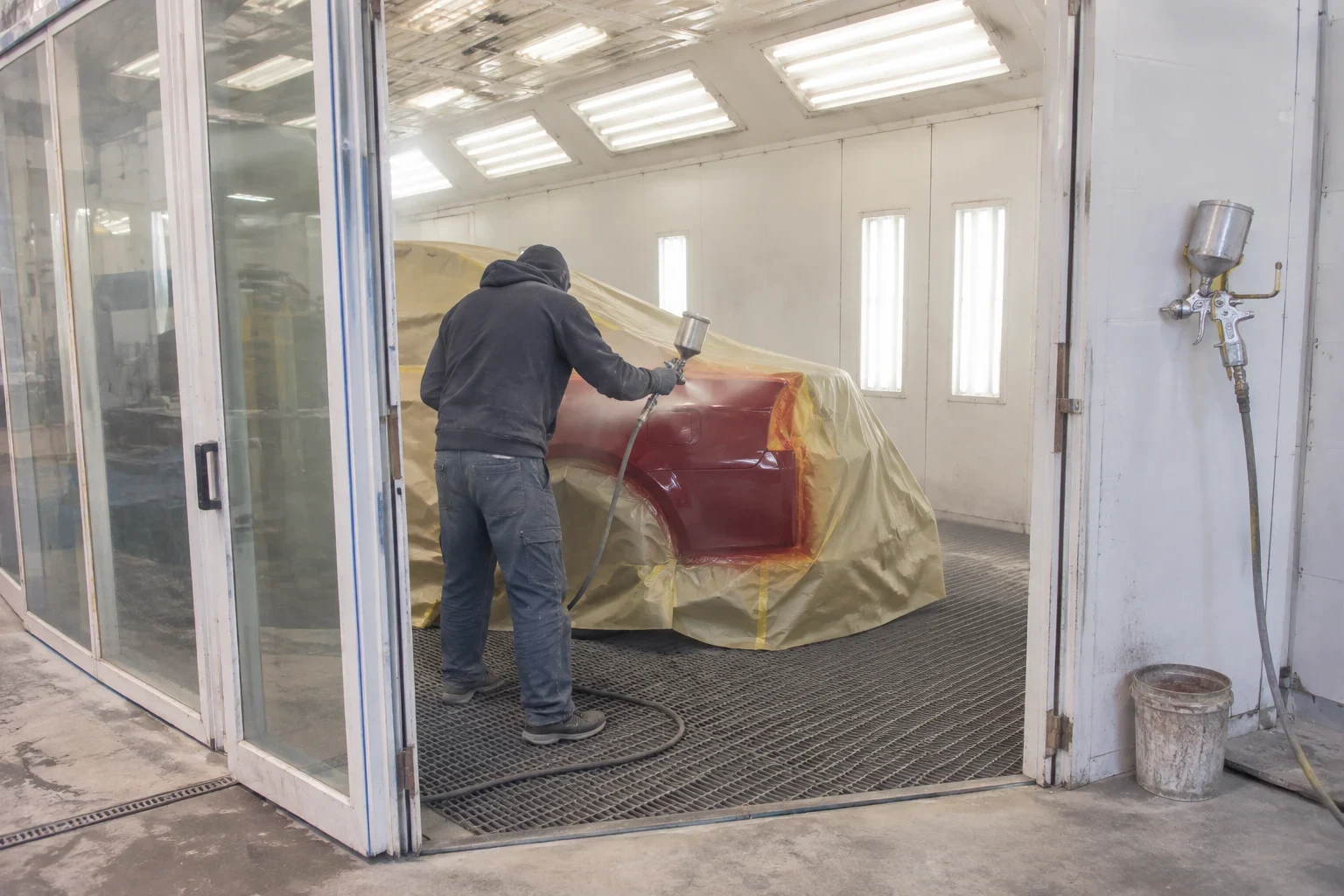
- Basecoat and clearcoat are applied in our enclosed booth, which keeps dust out of the finish and contains overspray. The clear is then cured before the car is handled.
- Cut, polish and reassembly
- After curing we wet-sand any small texture and polish the surface to match the gloss of the rest of the car. Trim, emblems and lights go back on, and parking sensors are checked if the bumper was painted.
Signs your paint needs refinishing
Peeling or flaking clearcoat
A cloudy, white patch that lifts at the edges means the clear has let go. It will keep spreading, usually across the roof, hood and trunk lid first.
Chalky, faded color
Strong summer sun breaks down paint over time. If a wipe with your finger leaves color on it, the surface is oxidizing and needs attention before it reaches primer.
Rock chips showing rust
Small chips on the hood and front bumper can let moisture reach bare steel. Catching them early keeps the repair to paint rather than metalwork.
Scratches you can feel with a fingernail
If a nail catches, the scratch is through the clear and often into the color. Polishing alone will not remove it.
A panel that does not match
An earlier repair that looks a shade off in sunlight usually skipped blending or used the wrong variant of the color. Refinishing that panel with a corrected formula and a proper blend brings it back in line with the original paint around it.
What affects the cost of paint work
Two cars with similar scratches can need very different amounts of work. The price depends mostly on labor in prep and how many panels must be sprayed to get an invisible match. Your written estimate shows each of these so nothing appears later as a surprise.
Number of panels and blending
One door may also need color blended into the fender and the rear door. Each added panel adds prep and material.
What is under the paint
Rust, old body filler or a previous poor repair has to be corrected before new paint goes on. Sometimes this only shows once the old finish is sanded, and we call you before doing extra work.
Type of color
Solid colors are the simplest. Metallics take more care to lay evenly, and three-stage pearls need an extra coat and more test cards.
Parts removal
Handles, mirrors, moldings and sensor-equipped bumpers take time to remove and reinstall properly.
How a paint job runs at our shop
- 1
Look it over together
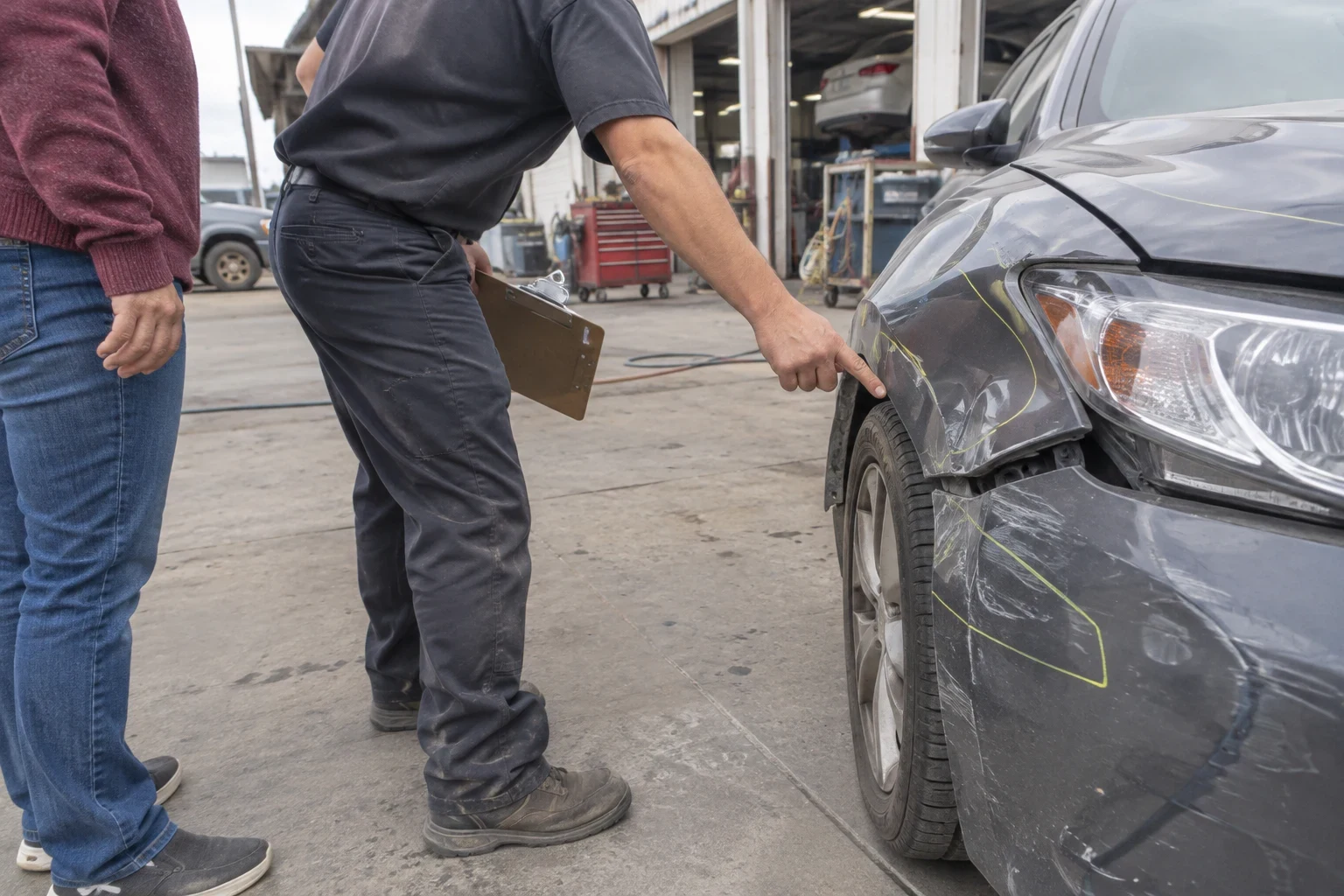
You bring your car in and we inspect the paint in good light, measure where needed and explain whether it needs polishing, spot repair or a full panel refinish. You get a written estimate that lists each panel.
- 2
Prep and mask
We remove trim and emblems where we can rather than taping around them. The panel is sanded, cleaned, primed and sealed, and everything not being painted is masked.
- 3
Spray in the booth
Color goes on in thin, even coats, followed by clear. Waterborne basecoat keeps solvent emissions within state limits without giving up color depth.
- 4
Cure, polish and inspect
Once the clear has cured, we polish, reinstall parts and check the finish outside in natural light. We walk around the car with you at pickup and point out what was done.
Common questions about paint work
How do you get the new color to blend in with my original paint?
The process begins with the factory paint code from your door jamb. We spray a sample card and hold it against your car outdoors in daylight. If the original finish has shifted with age, we tint the mix to suit it and fade the new color into the neighboring panel, which is what keeps a repair from standing out.
Is it possible to repaint only one panel or a small area?
It is, and both are routine for us. Minor chips and light scratches can often be handled as a spot repair, and single-panel work is very common. When a spot repair would leave an edge you could see, we recommend doing the whole panel and tell you the reason.
When is it safe to wash or wax the fresh paint?
After the first week, a gentle wash by hand is fine. Stay away from brush-type automatic car washes for roughly a month. Hold off on wax for about 30 days so the clearcoat has time to fully harden.
Do your coatings meet California rules?
They do. Our waterborne basecoats and other coatings fall within the state and local air district limits on volatile organic compounds, and everything is sprayed in an enclosed booth. There is nothing you need to arrange or file.
Does insurance cover refinishing work?
When the paint was damaged by a collision, vandalism or another event your policy covers, it usually goes through your insurance claim. Damage from age, like sun fading or peeling clearcoat, is generally not covered. Our Insurance Claims page describes how we work with your adjuster on the estimate.
Get a clear answer on your paint
Tell us what you are seeing and when you can bring the car in. We will look at it, tell you whether it needs polish or paint, and put the estimate in writing.