ServicesBumper Repair
Bumper Repair in Chowchilla
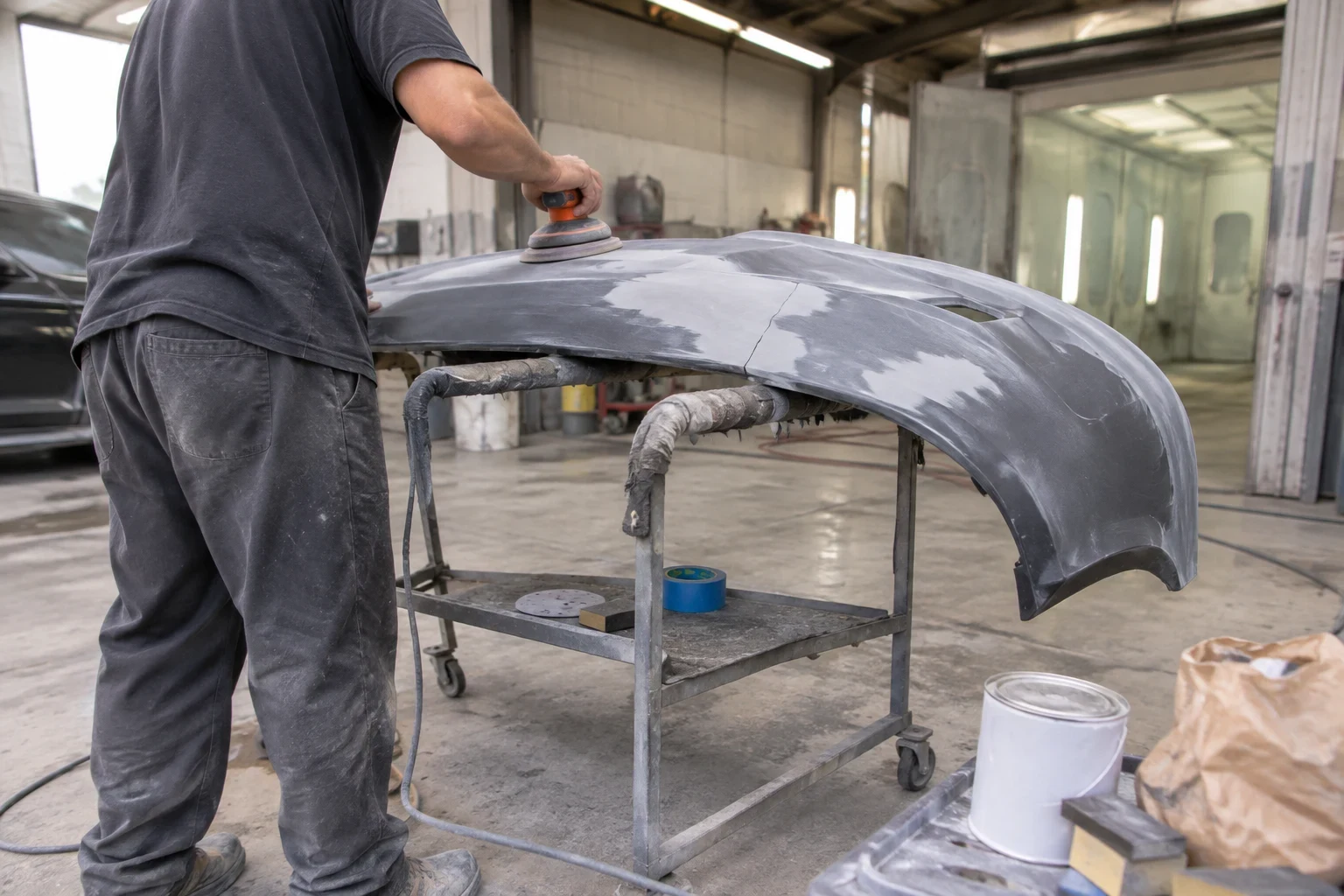
Most bumper damage goes deeper than the cover you can see. We take the cover off, check the reinforcement bar, foam absorber and sensors behind it, and repair or replace each part to the manufacturer's procedure. Then we refinish it so the bumper reads as part of your car again.
More Than a Plastic Cover
A modern bumper is a system. The painted cover is a flexible plastic shell. Behind it sits a foam or plastic energy absorber, then a steel or aluminum reinforcement bar bolted to the frame rails. Many cars also carry parking sensors, a radar unit or a camera in or behind the cover. After a slow bump in a parking lot, the outside may show barely a scuff even though a mounting tab underneath is broken or the absorber has collapsed.
Our job is to find what actually took the hit and fix that part correctly. Automakers publish repair procedures that say which bumper parts can be repaired, which must be replaced after an impact, and when a sensor has to be recalibrated. We work from those procedures rather than guesswork, and we explain what we found in plain terms before any work starts.
If the hit was hard enough to move the bar or the rails it bolts to, the job may also need collision repair or frame straightening. We tell you that at the estimate, not halfway through.
What Bumper Repair Includes
- Cover repair or replacement
- Cracks, tears and punctures in plastic covers can often be plastic-welded and reinforced from the back. When the damage runs through a mounting area or the material is too distorted, we replace the cover and tell you why.
- Absorber and reinforcement check
- We remove the cover to inspect the energy absorber and the reinforcement bar. Crushed foam or a bent bar no longer protects your car in the next impact, so these get replaced to the maker's guidance.
- Sensors, cameras and wiring
- Parking sensors, radar and camera brackets are checked for damage and correct mounting. When the manufacturer calls for calibration after bumper work, we make sure it is done and the systems work before you pick up.
- Refinish and blend
- Repaired and new covers are primed, painted and clear-coated, with color blended into the neighboring panels so the bumper does not stand out in daylight. Flexible covers get a flex additive so the paint moves with the plastic.
- Fit, gaps and trim
- We reset brackets, clips and fasteners so the bumper lines up evenly with the fenders, hood or trunk. Grilles, fog light bezels and trim are refitted or replaced as needed.
Signs Your Bumper Needs Attention
Uneven gaps at the corners
If one end of the bumper sits lower or sticks out past the fender, a tab or bracket has likely broken. Left alone, the cover can work loose at highway speed.
Cracks or white stress marks
White lines in the paint mean the plastic underneath has been stretched or split. They tend to spread with heat and vibration.
A sensor or camera warning
A parking-assist error, a blank backup camera or a driver-assist message after a bump points to a sensor that moved or was damaged.
Paint peeling at the edges
Flaking paint on a bumper often follows an old impact that flexed the cover. Once moisture and Valley dust get under the edge, the peeling speeds up.
A hit that looked harmless
Low-speed impacts can crush the absorber with almost no mark on the cover. If you felt a solid bump, it is worth having someone look behind it.
What Moves the Cost of Bumper Repair
Two scrapes that look alike from the curb can lead to very different bills. The price is set by the parts hidden under the plastic and by the way your vehicle was engineered. We give you a written estimate after inspection, and we explain any change before it happens.
Repair versus replace
A cover that can be welded and refinished usually costs less than a new one. Damage at mounting points or across a large area often makes replacement the sound choice.
Hidden parts
A crushed absorber, a bent reinforcement bar or broken brackets add parts and labor. These only show up once the cover comes off.
Sensors and calibration
Bumpers with parking sensors, radar or cameras take more time to remove and refit, and some require calibration after the repair.
Paint and blending
Metallic, pearl and three-stage colors take more material and more steps to match. Blending into the fenders adds time but keeps the color consistent.
Parts source
Original manufacturer parts and aftermarket parts differ in price and sometimes in fit. If insurance is paying, your policy may set which is used, and we will tell you what was specified.
How a Bumper Repair Runs
- 1
A call to talk it through
You describe what happened and what you can see, and we agree on a day for the car to come in for inspection. If an insurance claim is involved, have your claim number handy.
- 2
Inspection and written estimate
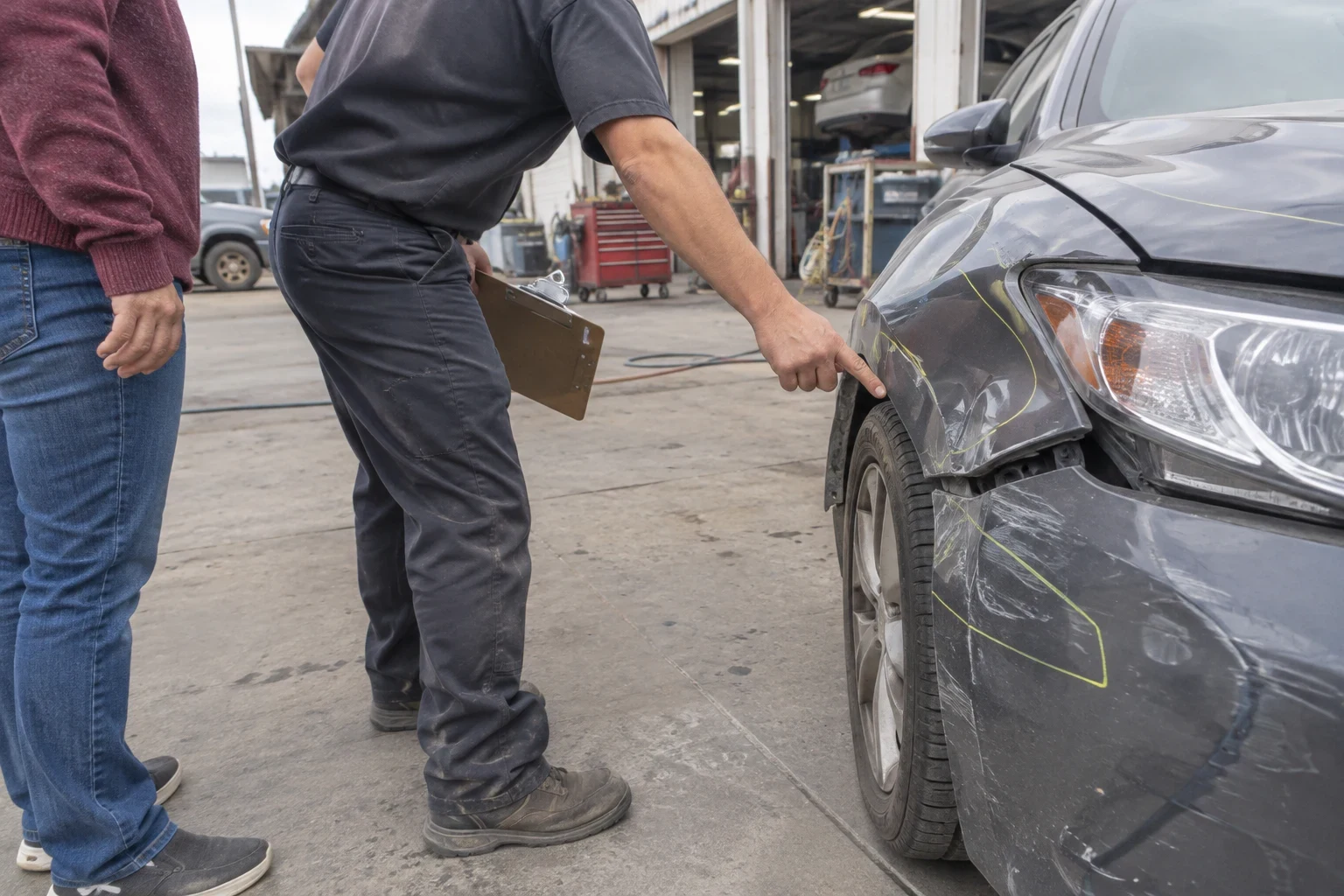
We look the bumper over and photograph the damage. California requires a written estimate and your authorization before repair work starts, and we go over every line with you, including what may show up once the cover is off.
- 3
Teardown and parts
With the cover removed, we confirm the hidden damage and order the parts. If we find something the estimate missed, we stop, show you photos and get your approval before going further.
- 4
Repair and refinish
The cover is repaired or replaced, the absorber and bar are addressed, and the bumper is painted and blended in our booth. Sensors are remounted and calibrated where the manufacturer requires it.
- 5
Final check and pickup
We check gaps, lights, sensors and the paint finish in good light. When you pick up, we walk you around the repair and answer any questions.
Bumper Repair Questions
Can a cracked plastic bumper be repaired, or does it need replacing?
Many cracks and tears can be repaired by plastic welding and reinforcing the back side. If the damage runs through a mounting tab or sensor opening, or the plastic is badly distorted, replacement is the better repair. We show you the damage and explain which way we would go and why.
How do you keep a repainted bumper from looking a shade off?
The starting point is your vehicle's factory paint code, and from there the color is tuned to how your current finish has weathered over the years. Carrying that color a little way into the fenders or quarter panels is what hides the transition when the car sits in bright sun. Our Paint and Refinishing page goes further into how the finish work is done.
My parking sensors stopped working after the bump. Is that part of the repair?
Yes. We check each sensor, its bracket and the wiring, and replace what was damaged. When the manufacturer requires calibration after bumper work, we make sure that happens and confirm the systems work before the car leaves.
Should I go through insurance for a bumper?
That depends on the extent of the damage and your deductible, and the decision is yours. We can give you a written estimate first so you can compare. If you do file, our Insurance Claims page explains how we work with your insurer's adjuster.
How many days should I plan to be without my vehicle?
The answer turns on three things: the damage we find once the cover is off, how quickly parts arrive and how long the paint needs to cure. You get an expected timeline along with the estimate. If a part is held up or hidden damage changes the plan, we let you know right away.
Have the Bumper Looked At Properly
Tell us what happened and we will set a time to inspect your car and write up the estimate. You will know what is behind the cover before any work begins.