ServicesDent Repair
Dent Repair in Chowchilla
A dent is usually more than a cosmetic annoyance. We look at the metal, the paint and what sits behind the panel, then choose the gentlest repair that restores the shape. You get a written estimate before any work begins.
The right method for the dent you have
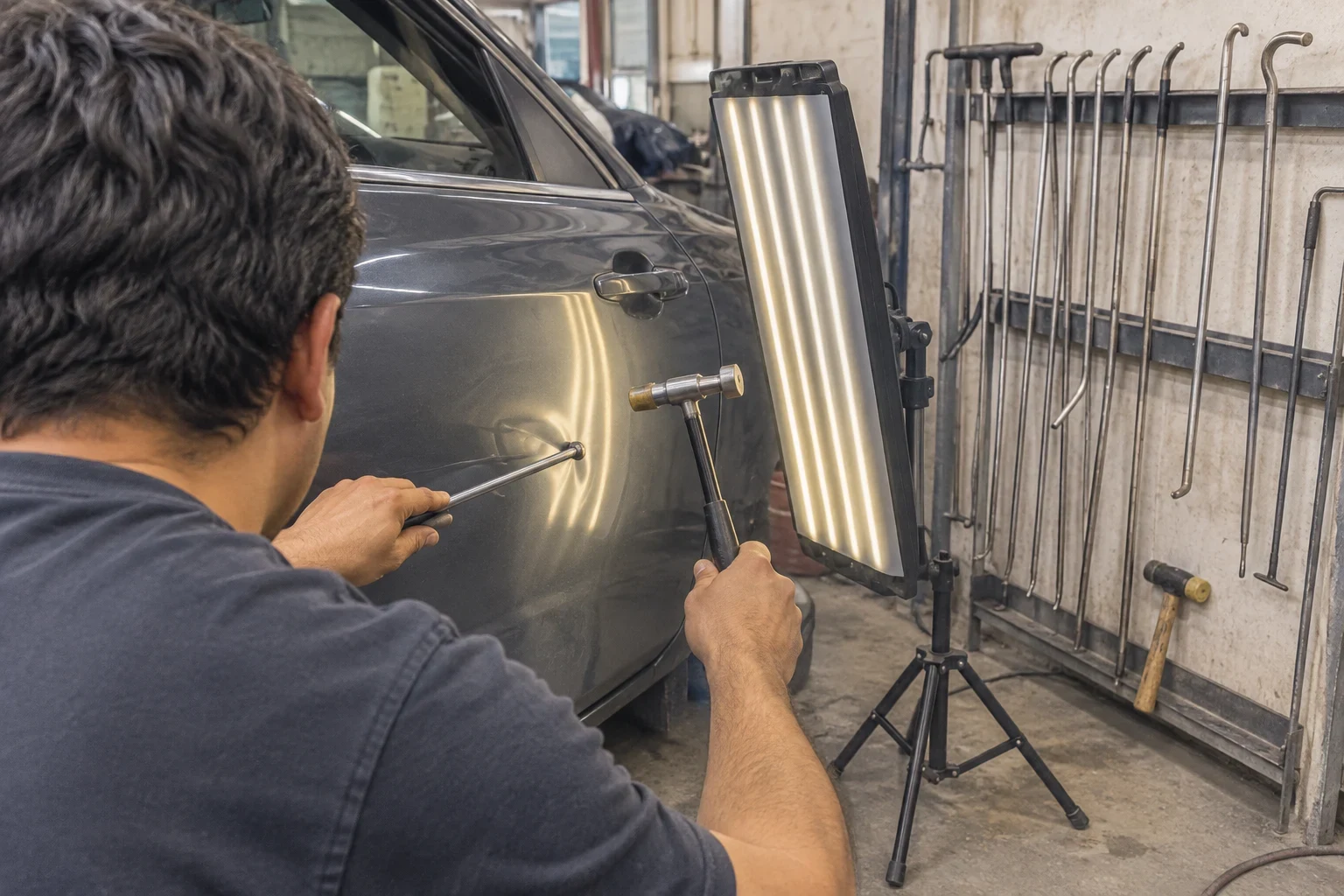
Most small dents on your car can come out without paint. If the finish is unbroken and the metal has stretched only a little, we work the panel back from behind with rods and light pressure, or pull it from the front with glue tabs. The factory paint stays on the car, which matters for the look and for resale.
Some dents need more. A sharp crease, cracked paint or a dent right on a body line usually calls for conventional panel work, a thin skim of filler where it is truly needed, and refinishing matched to the rest of your vehicle. We tell you which category your dent falls into before we touch it.
Either way, we follow the vehicle maker's published repair procedures. In California, the shop has to give you a written estimate and get your approval before work starts, and again before anything changes. We treat that as the baseline, not a formality.
What our dent repair includes
- 01
Inspection under shop lighting
We read the panel under reflection boards and line lights, which show low spots and stretched metal the eye misses in daylight.
- 02
Paintless dent removal
For dents with intact paint, we massage the metal back from behind or pull it with glue tabs. No filler, no sanding, no new paint.
- 03
Careful trim and panel access
Reaching the back of a dent can mean removing a door card, taillight or headliner. Clips and fasteners are handled so they go back tight and rattle-free, and anything single-use is replaced.
- 04
Conventional repair when needed
Creased or cracked areas are straightened, finished with minimal filler and refinished. That work is handled through our paint and refinishing process.
- 05
Final check before pickup
We recheck the panel under the same lights we started with, so you see a straight reflection, not just a smaller dent.
Questions about Dent Repair?
Call(559) 900-3095Signs a dent should be looked at
Cracked or flaking paint
Once the paint breaks, bare metal is exposed. Rust can start under the edge of the chip and spread beneath good paint.
A door that sounds or feels different
If a dented door closes harder, rattles or lets in wind noise, the impact may have shifted the shell or the hinge area. That is worth checking before it wears the latch.
Dents on a body line or edge
Metal on a crease or panel edge is stiffer and stretches more. These dents rarely improve on their own and are easy to make worse with a home kit.
Clusters of small dents
Several shallow dents across a hood or roof often come from hail or falling debris. Paintless repair usually handles them well if they are caught before the finish cracks.
A dent near sensors or lights
Bumper and quarter panel dents can sit close to parking sensors or blind-spot radar. We check that those parts still mount and aim correctly.
How a dent repair job runs
- 1
You bring your car in
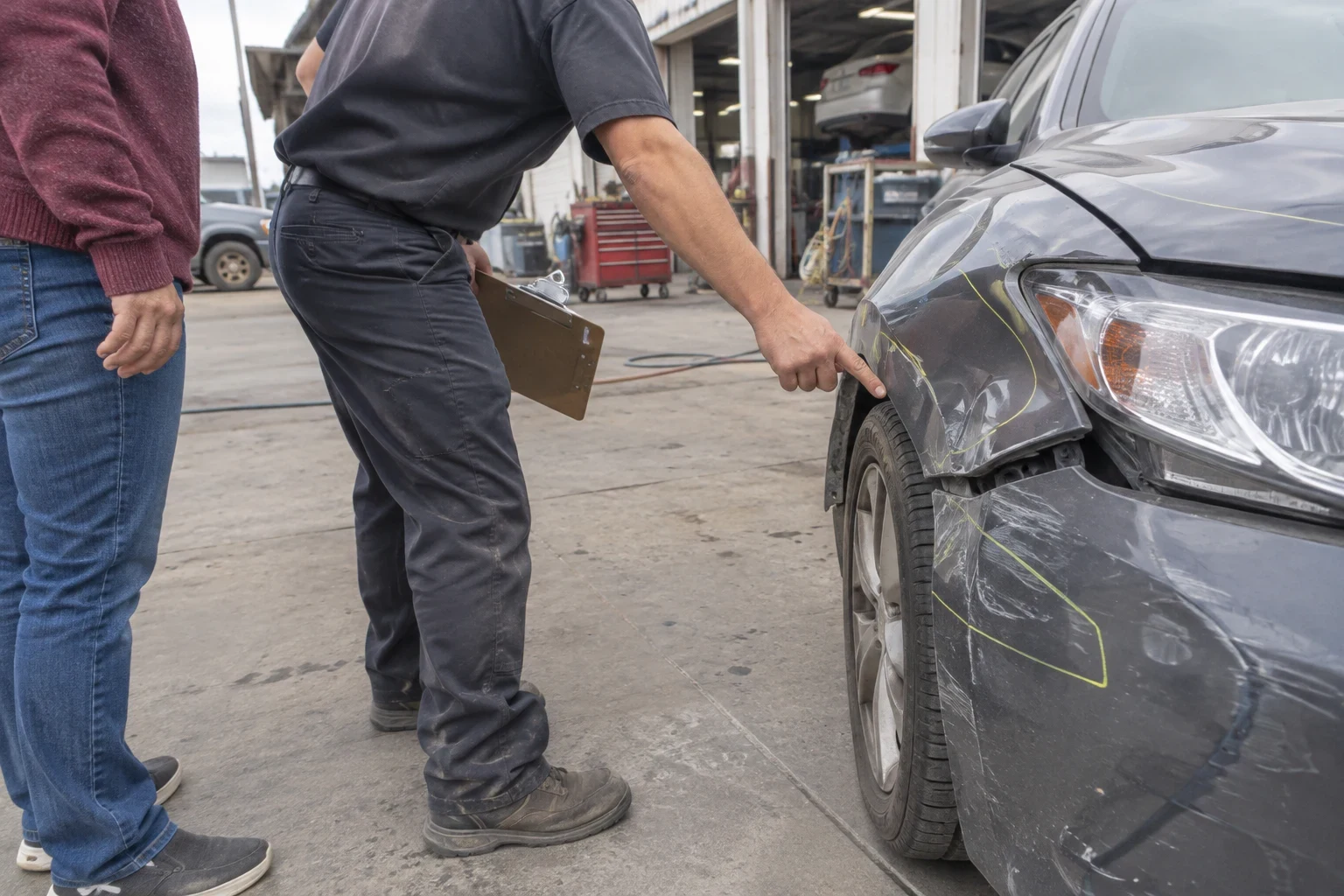
We look at the dent with you, under good light, and talk about what you want from the repair.
- 2
Written estimate
You get a written estimate that names the method, any trim we need to remove and whether paint is involved. Nothing starts until you approve it.
- 3
The repair
We protect the surrounding paint, gain access, and work the metal slowly in small pushes. Rushing a dent is how high spots and cracked paint happen.
- 4
Refinish if required
If the paint was already broken, the area moves to prep and paint, with color matched to your vehicle and blended into the neighboring panel.
- 5
Walkaround at pickup
We go over the panel with you, show you what was done, and point out anything else we noticed during the work.
What affects the price of dent repair
Dent repair is priced by the dent, not by a flat rate. Two dents the same size can take very different amounts of time depending on where they sit and how the metal moved. We explain each factor on the estimate so the number makes sense.
- Size, depth and sharpness
- A broad, shallow dent moves easily. A small, sharp one has stretched the metal and takes far more time to level.
- Location on the panel
- Dents on body lines, near edges or over internal braces are harder to reach and harder to finish cleanly.
- Panel material
- Many newer trucks and cars use aluminum hoods, doors or fenders. Aluminum is less forgiving than steel and needs slower, more careful work.
- Paint condition
- Intact paint usually means a paintless repair. Cracked or chipped paint adds prep, refinishing and blending time.
- Access and trim removal
- Some dents need a headliner, interior panel or light assembly removed first. Others can be reached in minutes.
Dent repair questions
Does every dent come out without new paint?
Not always. The paintless method depends on two things: a finish with no cracks and metal that has only flexed, not stretched badly. A deep crease, a dent on a sharp edge or any spot where the paint has split will usually need panel work and refinishing instead. Once we have looked at the panel, we tell you which route fits.
Should I file an insurance claim for a dent?
Start by comparing the repair estimate with your deductible. A single door ding often costs less than the deductible, so paying for it yourself is usually simpler. Hail across several panels or a harder impact is more likely to be worth a claim. Our Insurance Claims page explains how we work with your insurer, and we can go over the numbers when you bring the car in.
How long will my car be at the shop?
A single paintless repair is often a short visit. Hail damage across several panels, or a dent that needs paint, takes longer because refinishing needs proper cure time. Your estimate includes a realistic timeline.
Will I be able to see where the dent was?
Our aim is a panel that reflects straight under shop lighting. With very sharp dents repaired the paintless way, a faint trace can occasionally stay, and we mention that before starting so you can weigh paintless against conventional repair.
Is it worth fixing a small door ding?
Often, yes. Small dings that crack the paint can rust, and a straight body helps at trade-in time. If a dent is purely cosmetic and you would rather leave it, we will say so honestly.
Get the dent looked at properly
Bring your car in and we will look at the dent under good light, explain the method that fits and put it in writing before any work starts. For damage beyond one panel, see our Collision Repair page.